


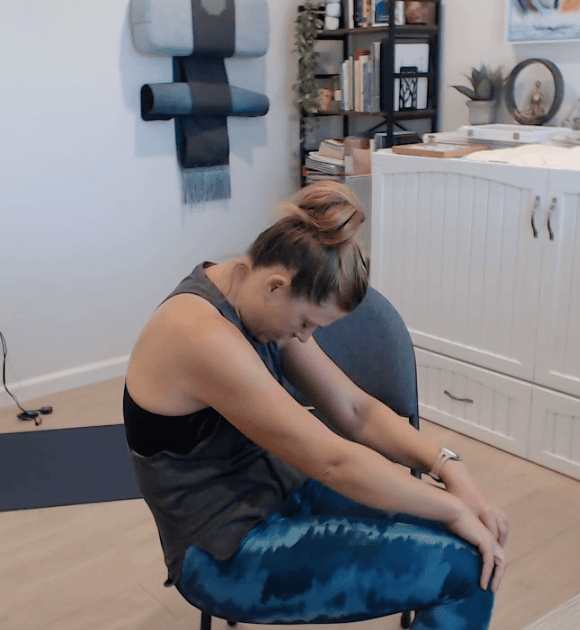
The Anatomy of Tech Neck: What’s Actually Happening to Your Spine, Muscles, and Nerves
At some point I realized I can’t tilt my head all the way back. If I look up and try to relax my neck, it tenses. Then, when I was working at my desk (like I do for many hours, many days), I noticed my shoulders were scrunched up to my ears.
Have you ever noticed a pain and thought, “When did that start?” because it’s been going on for longer than you can remember?
That was my neck.
So I started paying more attention to my posture, how I’m sitting at my desk, and how I lean my head forward when using my phone. No WONDER my neck hurts, and I can’t tilt my head back all the way without support.
So I started to learn more.
Turns out, this is pretty common. And it has a name: Tech Neck.
What is Tech Neck?
Tech neck is not a physical deformity or a sign that you’re doing something uniquely wrong. It’s what happens to most of us when we spend hours a day looking at a screen – either sitting at your desk with poor posture or looking down at your phone – and you’re not consciously aware of your posture.
Put simply, tech neck is pain, tightness, and muscle strain in the neck and shoulders caused by looking down at screens for a long time (source).
Your Spine’s Natural Curve (and what happens when it flattens)
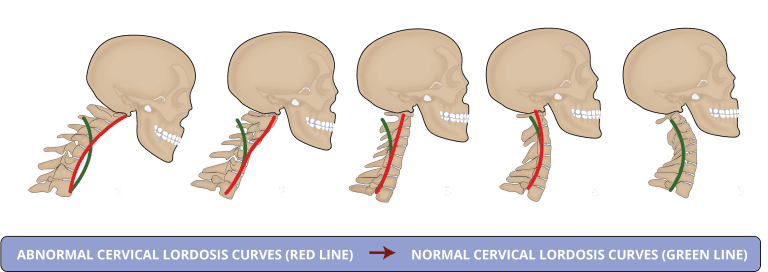
https://levelspine.com.au/what-should-your-neck-curve-look-like/
Your cervical spine, the part of your spine that runs through your neck, is designed with a natural forward curve. This helps your neck absorb shock and distribute the weight of your head evenly.
When you spend hours looking down, your head shifts forward out of that natural curve. Over time, with enough repetition, that curve can flatten, or in more significant cases, even reverse. Your body starts adapting to the position you put it in most often, which is exactly why this creeps up gradually, and you may not realize when the pain even started.
Meet Upper Crossed Syndrome
There’s a name for the specific pattern of imbalance that tech neck creates: Upper Crossed Syndrome. It sounds clinical, but the concept is simple once you see it laid out.
When you’re hunched forward, two groups of muscles are affected in opposite ways:
Muscles that get tight and short:
- Upper trapezius (the muscles running from your neck to your shoulders)
- Levator scapulae (small muscles along the side of your neck)
- Pectoral muscles (your chest)
Muscles that get long and weak:
- Deep neck flexors (small stabilizing muscles at the front of your neck)
- Lower trapezius and rhomboids (muscles between your shoulder blades)

Why This Matters Beyond “It Hurts”
Our bodies will adapt to what they are used to. Left unaddressed, consistently being in this position can contribute to tension headaches, shoulder/neck tightness and pain, loss of range of motion, and, in severe cases, nerve irritation. (Note: If you’re experiencing numbness, tingling, or sharp pain, that’s worth a conversation with a doctor or physical therapist, not just a yoga blog.)
The good news: because this is a pattern your body learned through repetition, it’s also a pattern your body can unlearn the same way.
Many of us have received information about good posture. You may have even received training about ergonomics in your job. Or at the very least, you’ve had a parent or loved one tell you to “stop slouching” (guilty 🙋♀️).
But that slouch is very tempting when you don’t feel like engaging your core, or you’re just distracted by the thing you’re actually working on.
So What Actually Helps?
Understanding the anatomy is step one. Step two is retraining the pattern, strengthening what’s gone weak, releasing what’s gone tight, and building new habits your body can actually sustain throughout the day, not just during a single stretch break.
I’m working on something called the 7-Day Tech Neck Reset, a simple, day-by-day way to actually undo this pattern. If that sounds like something you’d want, I’d love to have you on the waitlist.
~ Shauna 🌿
Meet Your Guide
Shauna Hay-Viets is a mom of two and a yoga instructor with 16+ years of practice and nearly a decade of teaching experience. Shauna specializes in teaching beginner-friendly, adaptable yoga to busy, active women looking to reduce stress and build a practice that fits real life. Shauna is passionate about helping her students achieve their greatest goals on and off the mat. Join The Yoga Habits Collective for more training and resources.


